Input costs are high, herbicide programs are complex, and when the sprayer rolls, it’s tempting to take a one-size-fits-all approach and apply contact herbicides across every acre. The assumption is straightforward: more coverage equals better weed control.
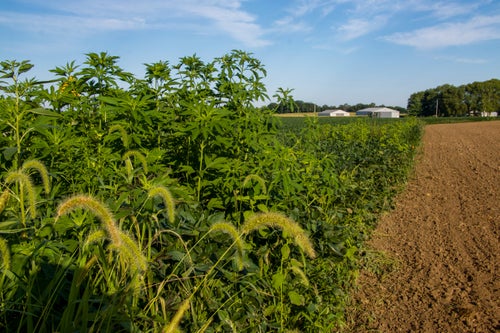
But fields are not uniform and weeds are not everywhere. When you look closely at the data, blanket applying herbicides can cost you more than just chemical dollars. It can also cost you yield.
The Cost of Broadcast Programs
Input chemicals are one of the largest costs in crop production, especially contact herbicides which are often designed to handle the toughest weeds. However, those problem weeds typically occupy only small portions of a field. Applying a full-rate contact program across every acre leads to overspending in low pressure areas while still rolling the dice on adequate control where pressure is highest.
Residual herbicides, fungicides, insecticides and fertilizers all serve different roles. Most of these need to be broadcast applied to protect yield and set the foundation for good agronomic outcomes. This discussion is not about eliminating residuals or critical broadcast passes. The question is much more specific:
What happens when we blanket apply contact herbicides where no weeds exist?
Clean Fields Still Pay a Price
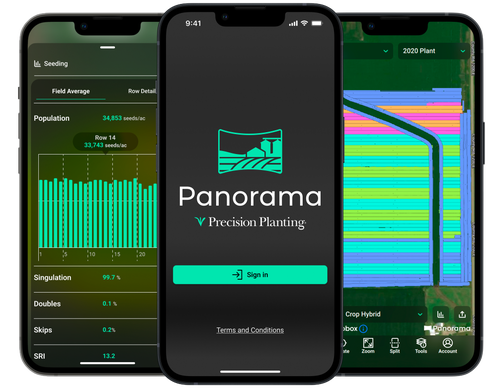
Weed mapping data from thousands of acres tells a consistent story. Large portions of most fields have no weeds at all during blanket applications. When weed severity maps are broken down, roughly 70% of acres often fall into the “no weed” category – yet those acres still receive contact chemistry.
When contact herbicides are sprayed over a crop, the plants still have to metabolize that chemistry even if they are engineered to be unaffected by it. This metabolic process takes energy and resources away from growth and yield formation. But does this extra stress actually hurt yield, or is it just theoretical?
To answer that question, Precision Planting research teams implemented side-by-side sprayer plots over multiple seasons. These trials compared two scenarios. One scenario blanket applied contact herbicides across the entire field. The other scenario applied the same contact herbicides only where weeds were present. Everything else was held constant.
Yield Loss in Corn
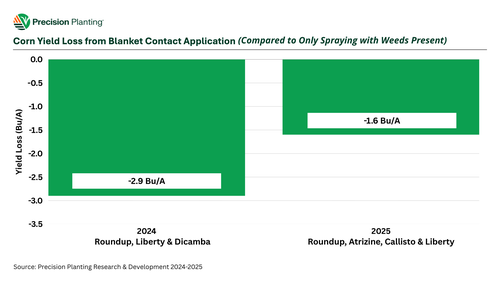
In corn, results were consistent across multiple products and years. In 2024, blanket applying Roundup, Liberty and Dicamba resulted in a 2.9 Bu/A yield loss compared to spraying contacts only where weeds existed.
In 2025, using a slightly different program of Roundup, Atrazine, Callisto and Liberty still resulted in a 1.6 Bu/A yield loss.
Across years and programs, blanket contact application showed a repeatable yield penalty in corn.
Yield Loss in Soybeans
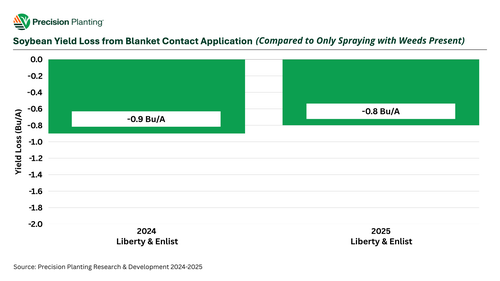
Soybeans showed a similar pattern. Trials using Liberty and Enlist in both 2024 and 2025 showed yield losses of just under 1 Bu/A each year when contacts were blanket applied.
While the number may seem small, the consistency across years points to a real effect, not random noise.
Adding Up the Annual Cost
When you combine yield loss and wasted chemistry, blanket applying contact herbicides becomes an annual tax on the operation.
On average, yield loss alone accounted for about $8 per acre per year. On top of that, roughly 70% of contact herbicide was applied to acres with no weeds.
For many farmers, that translates to $40/A wasted in corn and $60/A wasted in soybeans. Year after year, those dollars add up.
Spot Spraying Can Help
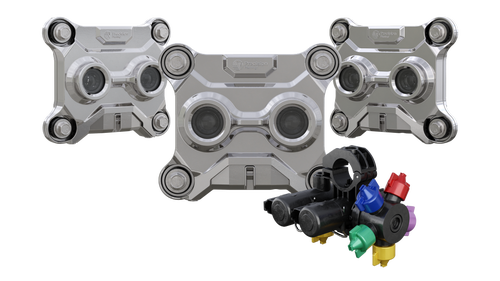
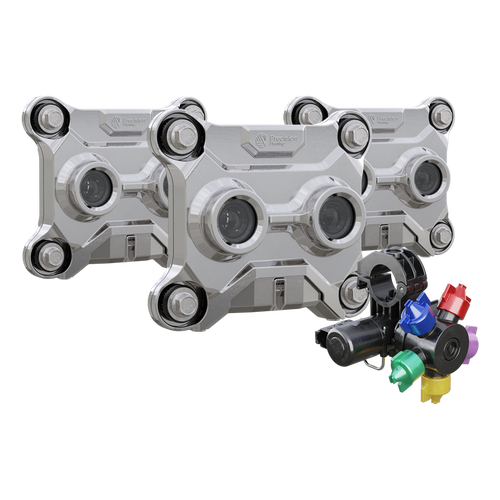
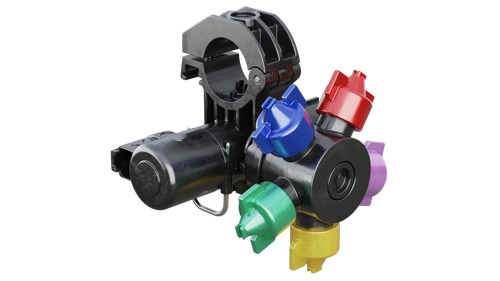
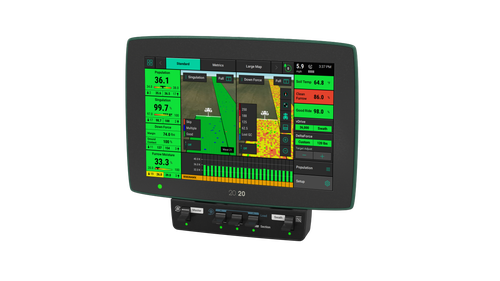
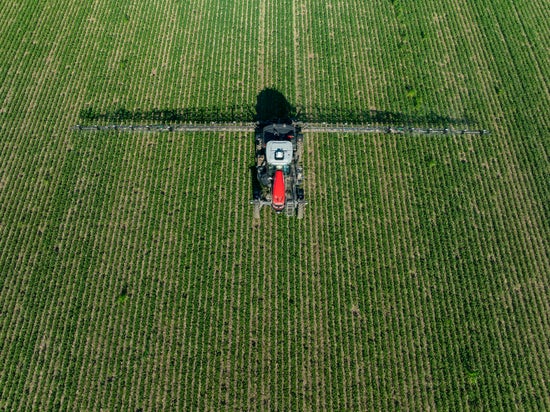
Spot spraying changes the equation. Instead of guessing where weeds are and building a halfway compromise program, cameras identify weed severity in real time. High weed severity areas receive the full rate, low severity areas receive less and areas with no weeds receive none.
This approach potentially lessens the total contact chemical needed, reduces crop stress and preserves yield while still allowing farmers to be aggressive where weeds actually exist. SymphonyVision | Spot is an ideal solution to implement a spot spraying program, or SymphonyVision | Duo can be used to reduce the total number of passes and make blanket applications at the same time as a contact chemical pass.
A Better Way Forward
Blanket application of contact herbicides made sense when visibility across the field was limited. But today, with boom‑mounted cameras and detailed weed maps, we can see exactly where pressure exists and where it does not.
Broadcast contact herbicide programs cost yield, waste chemical and lock farmers into one‑size‑fits‑all decisions. Targeted spraying changes that dynamic by improving weed control where it matters and keeping more dollars where they belong – in your pocket.