Key Takeaways
- Diagnose and correct yield‑limiting water issues using scouting, historical imagery and selective drainage tile for fast ROI.
- Increase nutrient use efficiency by prioritizing banded applications, planter‑applied and sidedress nitrogen strategies guided by trustworthy soil sampling.
- Use accurate elevation data, RTK guidance and autoslope design to survey, design and install drainage tile with confidence.
Hear from Luke Stuber, Josh Ide, Doug Wiegand and Josh Stoller as they discuss how general soil fertility and land management principles can but be put to work on your farm. Learn how to quickly diagnose field issues using layered data like historical imagery, wet‑spot scouting and replant mapping to uncover hidden drainage challenges that limit yield. Then see how targeted tiling, supported by accurate surveying and RTK corrections, improves yield and long‑term consistency. Next gain practical insights into nutrient efficiency, including why banded fertilizer placement, planter‑applied nitrogen and sidedress timing improve uptake compared to broadcast methods. We finish by emphasizing trustworthy soil testing and focusing fertility dollars where they can make the biggest impact, helping you stay profitable in tight economic conditions.
Using Data Layers to Accelerate ROI on New Acres
You can quickly understand and correct yield-limiting factors on new or neglected acres by stacking multiple data layers. Historical imagery, early season wet‑spot scouting and replant maps can reveal consistent moisture patterns that may not show up on the yield map from a single year. By combining these data layers with notes on where tile does or does not exist, farmers can pinpoint problem areas and understand why certain spots consistently dry out last or require replanting.
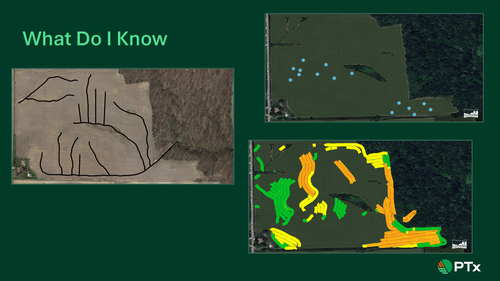
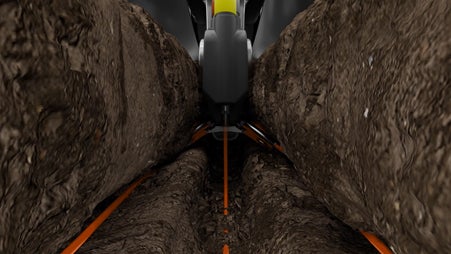
With those insights in hand, targeted tiling can deliver fast, measurable returns. By using existing outlets and focusing only on the biggest problem areas, Luke and one partner installed about 10,000 feet of tile in just one day with a relatively small material investment. The message is simple: ignoring drainage issues quietly costs farmers every year through lost time, delayed planting and replant expense.
“On our own farm, aggressively attacking drainage issues has probably been the biggest return that we could possibly have done.”
Luke Stuber
Product Engineer
Water Management Made Practical
Modern water management can be broken into three clear steps: survey, design and install. By moving the PTx Trimble GNSS receiver you already own from the cab to the tile plow and pairing it with RTK corrections from a base station, you can achieve the vertical accuracy needed for precise tile placement. Surveying the entire field exposes every slope and depression, including areas that only hold water during rare, extremely wet years. With a complete topographic map, farmers can prioritize drainage investments based on real need rather than assumptions.
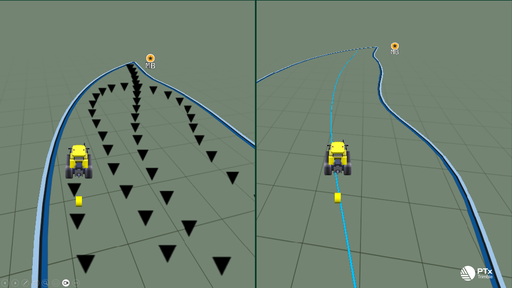
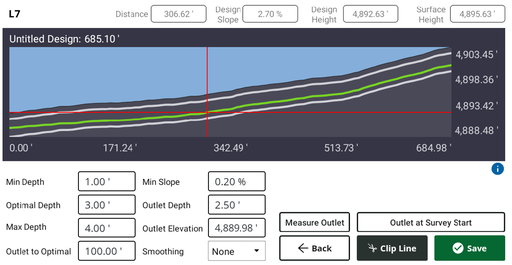
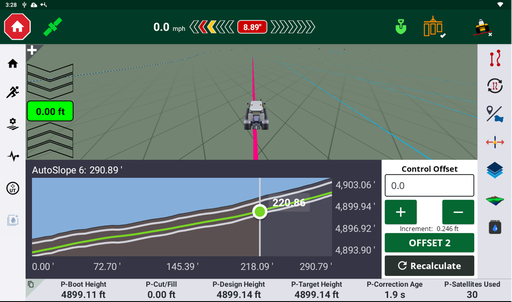
Design becomes simple with in-display autoslope tools that use depth and slope parameters to create an ideal tile profile, flagging any errors before work begins. When installing, the display shows real‑time tile and tractor position while automatically controlling depth and recording the tile’s exact location. This eliminates the guesswork of old hand‑drawn maps and ensures accurate documentation for future maintenance. The same system can control hitch‑mounted plows, direct‑mount plows, ditchers, trenchers and self-propelled plows, giving you flexibility while standardizing drainage workflows.
The Power of Fertility Placement and Application
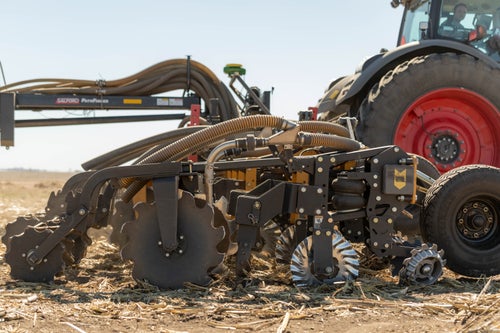
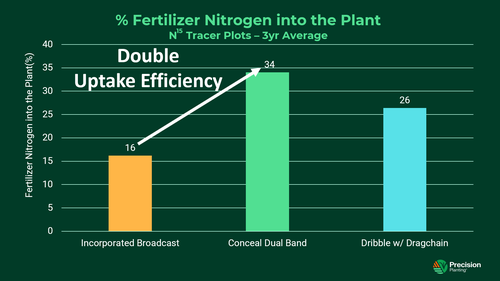
Decades of nutrient‑management research help us better understand how nitrogen placement impacts your bottom line. Nitrogen isotope studies show that only 16% of broadcast nitrogen actually makes it into the plant, even when it is incorporated. When nitrogen is banded into the soil instead, plants take up nearly twice as much, which means more of what you pay for ends up driving yield rather than being tied up by microbes. Planter‑applied nitrogen can also support early growth during periods when microbes immobilize residual nitrogen, helping the crop bridge the gap until conditions improve. As the season progresses and crop demand climbs sharply, sidedress applications supply nitrogen at the moment the plant needs it most, aligning uptake with growth for better efficiency.
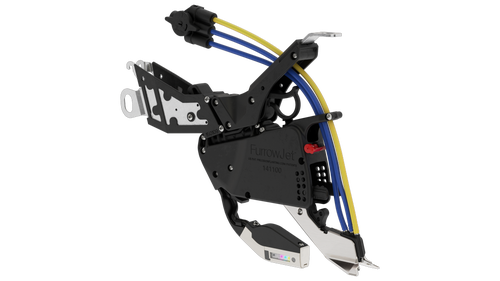
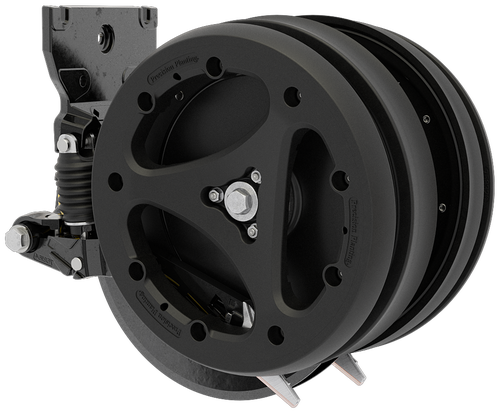
It is also important to be aware of how your application system affects your results. Traditional fertility delivery systems can have significant differences from row to row because speed changes, plugged knives or equipment inconsistencies cause uneven flow. Newer systems that use row‑by‑row flow sensors and automated valves ensure each row receives the right amount, protecting your return on investment by giving every plant a consistent start. By improving uniformity and optimizing placement, you position your fertility dollars to work harder and deliver a stronger payoff across the field.
Profit‑Driven Fertility Grounded in Trustworthy Data
The most important starting point for your fertility decisions every year is reliable soil data. Conflicting test results can delay critical applications like lime, so it is essential to work with labs that deliver accurate and repeatable readings. When your soil tests are trustworthy, you can confidently compare your current nutrient levels with university‑recommended critical levels for phosphorus and potassium, ensuring you do not overspend on fields that already have adequate fertility while directing inputs to the areas that truly need to be built.
“If soil tests below the critical level ... applying 25-50% of the recommended fertilizer in a band should be considered.”
Tri-State Fertility Handbook
When soils fall below those critical levels, applying a portion of total fertility in a band helps you reach target thresholds more efficiently, improves uptake and avoids wasted investment. Pairing banded applications with variable rate technology, planter‑applied nutrients and well-timed sidedress passes ensures every nutrient dollar works harder. As fertilizer prices rise and commodity prices fall, focusing on the efficiency of fertilizer banding becomes one of the most effective ways to maintain yields and protect your operation’s financial sustainability.